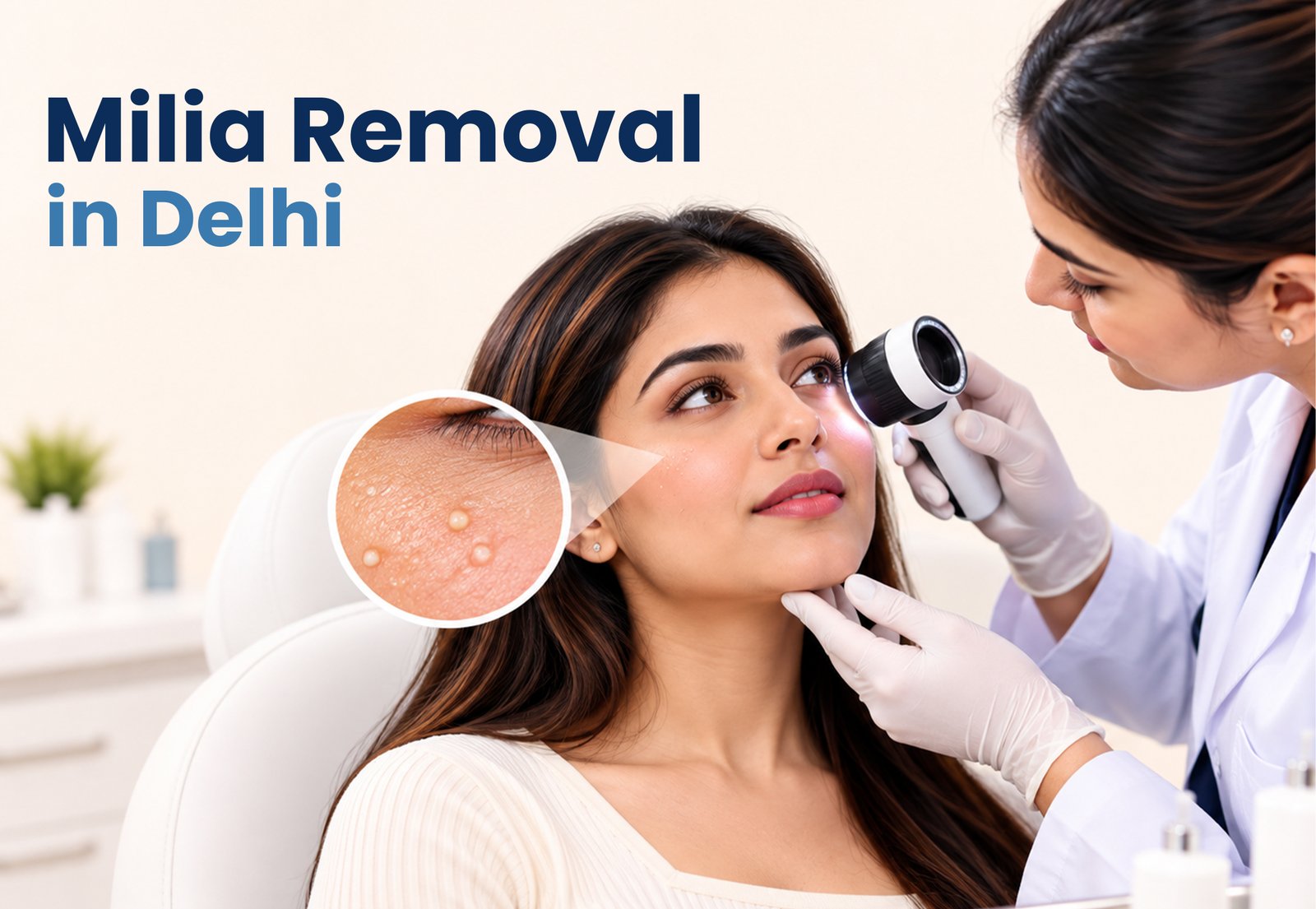
If you have seen tiny white or skin-colored bumps that don’t behave like regular pimples and have started searching for milia removal in Rohini, Delhi, here is the straight answer: milia are small, usually harmless cysts filled with keratin that commonly appear as tiny bumps on the skin. The best way to get rid of them depends on where the bumps are, how many there are, their size, your skin type, and, critically, if the bumps are actually milia at all. It is important to get a professional assessment before opting for any specific milia treatment in Rohini, Delhi.
What Are Milia?
Milia are small keratin-filled cysts that sit just under the surface of the skin. They look like small, hard, white, or flesh-colored bumps—often described as looking like small grains or beads under the skin. They are often found around the eyes, on the cheeks, the nose, and other parts of the face but can appear elsewhere.
It is worth being clear on the difference between milia and acne. Milia normally lack the oil-and-bacteria combination associated with acne and do not respond to acne treatments the way true white bumps from acne do. This is exactly why determining what you are truly looking at is more important than assuming by appearances alone.
What Exactly Causes Milia to Form?
Milia form when keratin, a protein in skin, hair, and nails, gets trapped under the skin’s surface instead of being shed naturally. This process can be linked to dead skin cells and keratin buildup, healing after injury or procedures, some underlying skin conditions, heavier or occlusive skincare products, and sun-related skin changes over time. Secondary milia may also develop after skin damage or certain procedures.
There is no single product that causes milia for everyone. Sometimes milia develop without any obvious trigger, and this is a normal and common pattern rather than a sign of something serious.
Where Do Milia Commonly Appear?
Milia are most often found under the eyes, on the eyelids, cheeks, nose, forehead, and around the mouth, but technically they can appear anywhere on the face too.
Milia Under Eyes
Milia under the eyes are especially tricky because the skin there is thin and delicate. Trying to extract under-eye milia yourself is significantly riskier than doing so elsewhere on the face because the surrounding tissue is more easily damaged and the area is close to the eye itself.
Can I Squeeze or Pop Milia at Home?
No. Squeezing, scratching, or trying to pierce milia at home may damage the surrounding skin, cause inflammation, increase the risk of infection, lead to temporary or persistent pigmentation, and possibly cause scarring. The greatest danger is around the eyes, where the skin is thinnest and most sensitive. If you want milia removed, professional assessment and removal is the safer route.
How Do Dermatologists Safely Remove Milia?
The method of removal depends entirely on the individual case—there is no one-size-fits-all technique.
Professional extraction: If the lesion is suitable, a dermatologist or properly trained professional may use a controlled extraction technique.
Other dermatologist-selected procedures: Depending on the type, location, and number of lesions, a dermatologist may consider other approaches as clinically appropriate.
Not all patients require laser therapy, cautery, chemical peels, or electrocautery. The treatment should be decided after a proper professional assessment, not as a default protocol.
What Is the Best Milia Removal Treatment in Delhi?
There is no one “best” treatment for everyone. What works best depends on the type of milia, how many you have, where they are located, whether they are under the eyes, how sensitive your skin is, whether you have had other skin procedures in the past, and your overall medical history. That is why professional assessment is important before deciding on any milia treatment in Delhi.
Milia Removal Under the Eyes—What Should You Know?
The skin under your eyes is delicate, so you should avoid trying DIY extraction in this area. Treatment here requires a careful assessment to confirm the bumps are truly milia and not something else that looks similar. Under-eye treatment should also include careful aftercare guidance, as this area is more sensitive than the rest of the face.
How Much Does Milia Removal Cost in Rohini, Delhi?
Milia removal cost in Delhi varies from clinic to clinic and from patient to patient. Cost factors usually include the number of milia present, the size of the lesions, their location, the specific removal method used, how many areas need treatment, consultation requirements, and the clinic’s level of expertise. There is no universal price for every case, so an in-person assessment is needed for accurate pricing.
How Long Does Milia Removal Take?
Procedure time varies depending on the amount of milia, treatment area, removal method, and your treatment plan. Some lesions may be relatively quick to treat, while others may take longer—especially when multiple lesions are present in different areas.
Is Milia Removal Painful?
The degree of discomfort depends on the method used, area being treated, number of lesions, and individual sensitivity. Most people can tolerate it, but it is not accurate to say that it is always painless.
What Happens After Milia Removal?
Short-term effects can include mild redness, temporary sensitivity, small marks at the extraction sites, minor swelling, or irritation depending on the removal method used. Recovery depends on what procedure is done and how your skin reacts.
Milia Removal Aftercare
- Keep the area treated clean.
- Follow your clinic’s instructions.
- Do not touch or pick at the treated area.
- Avoid unnecessary irritation.
- Protect the skin from overexposure to the sun.
- Use skincare products only as your doctor recommends.
- Follow instructions around makeup and active skincare during recovery.
- Contact the clinic if you have a serious or unexpected reaction.
Can Milia Come Back After Removal?
Yes. Even after existing milia are removed, new ones may form later. Removal treats the milia present now, but it does not necessarily prevent all future milia from forming. Some people are simply more predisposed to milia than others. Gentle skincare may help reduce unnecessary irritation, and professional advice can help identify contributing factors specific to your skin, but permanent prevention cannot be guaranteed.
Can Skincare Products Cause Milia?
Some people find that heavier or more occlusive skincare products can lead to milia, though this varies from person to person. Not every rich or emollient product will trigger milia in every person. If your milia do not clear up after changing products, it is better to seek a professional assessment than to keep trying different products on your own.
Milia vs. Whiteheads—What’s the Difference?
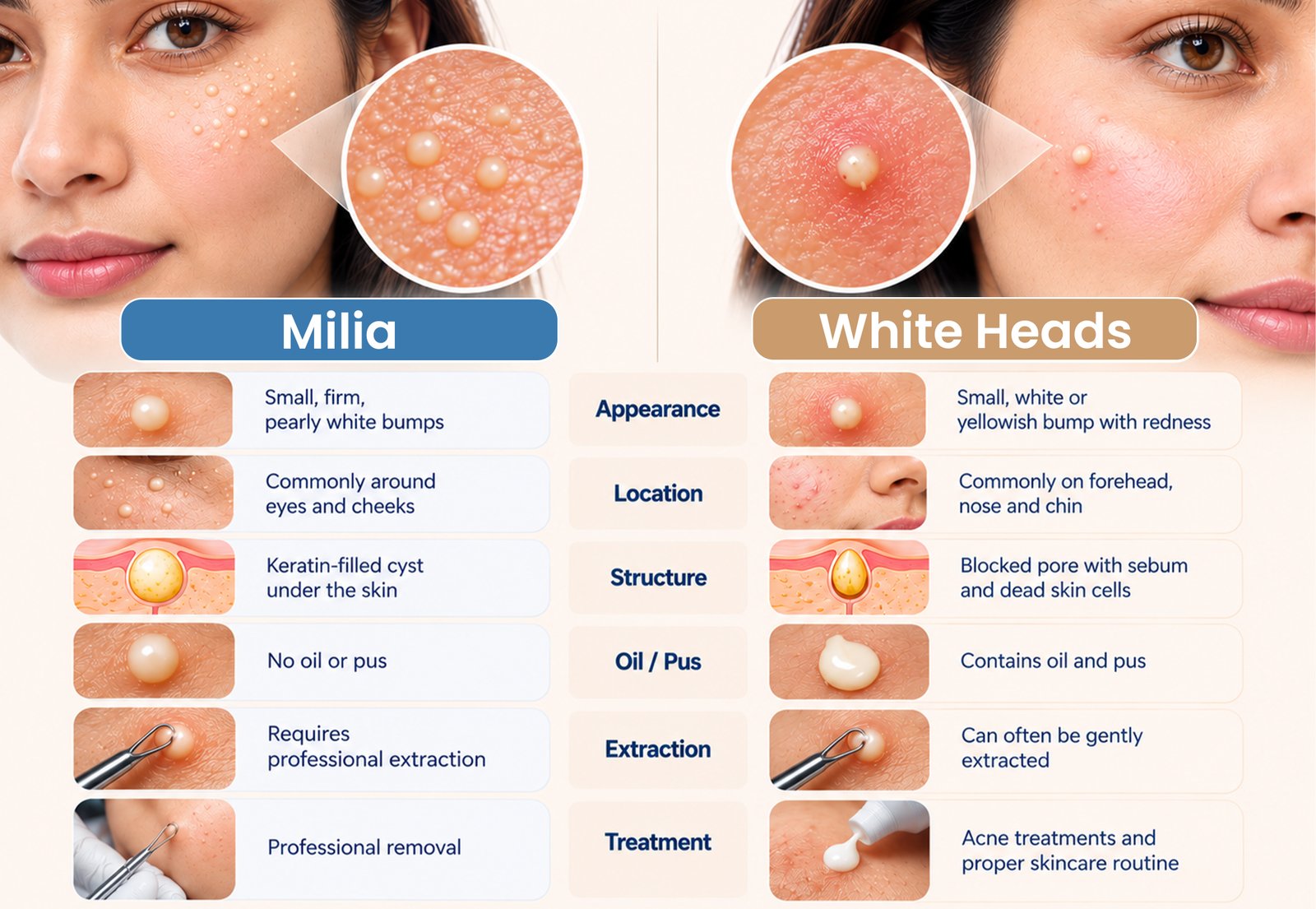
| Feature | Milia | Whiteheads |
|---|---|---|
| Nature | Small keratin-filled cysts | Type of acne lesion |
| Appearance | Often firm, white or skin-colored | Usually small closed bumps |
| Typical location | Often around the eyes and cheeks | Common in acne-prone areas |
| Pus/Oil | Not typical | May contain trapped oil and keratin |
| Extraction | Requires appropriate technique | Needs acne management approach |
Looking at the skin is not always enough to reliably tell the difference between these conditions—a direct skin examination is the more reliable way to confirm what you are dealing with.
When Should You See a Dermatologist for Milia?
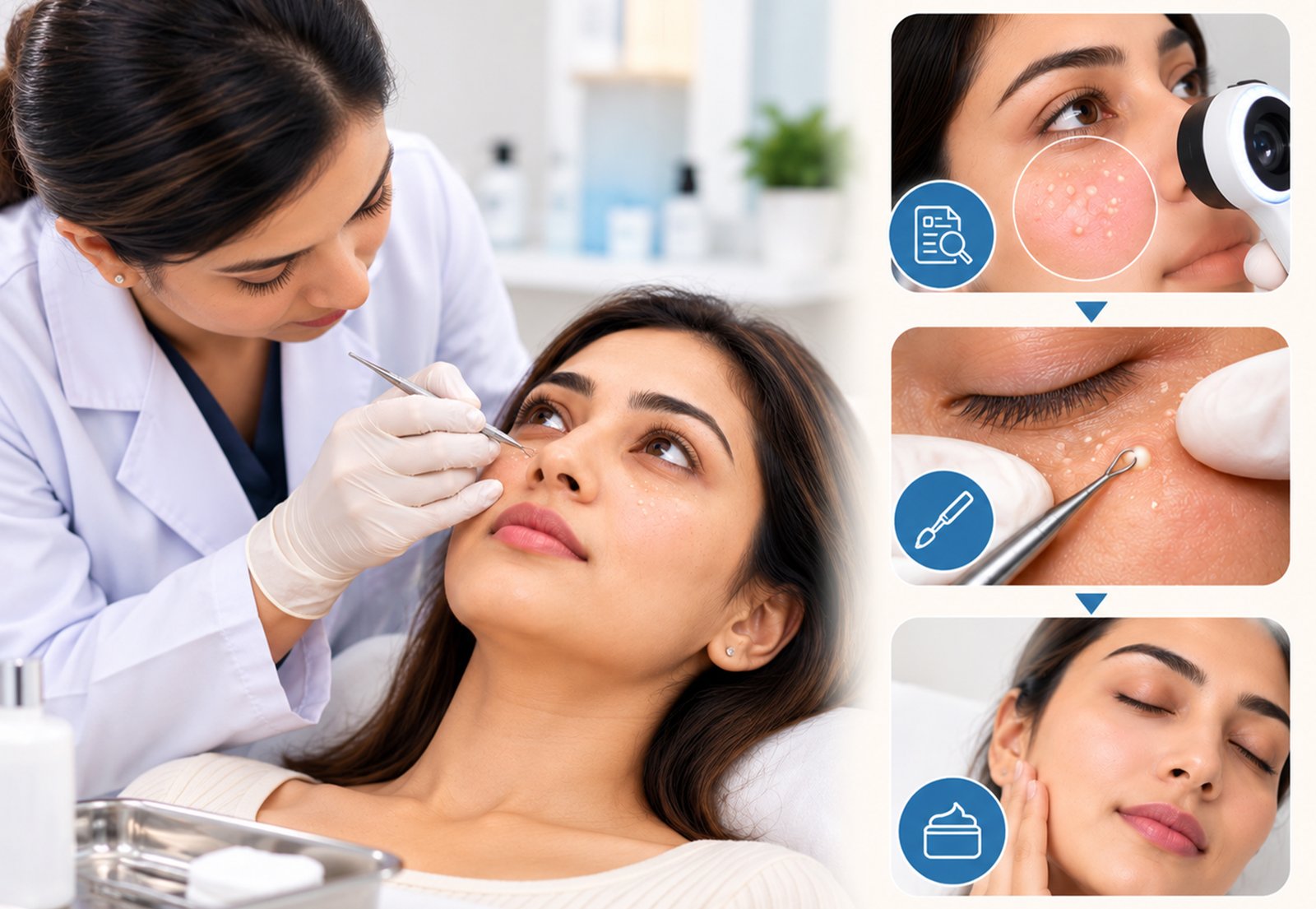
You should consider a professional evaluation if the bumps persist for a long time, there are many lesions, they are near the eyes, they keep coming back, you are unsure of the diagnosis, the area becomes irritated, you have tried to treat it at home and caused damage, or you simply want a professional to remove it rather than wait for it to go away on its own. A dermatologist in Rohini can properly assess whether what you are seeing is really milia and advise on the next steps.
Milia Removal in Rohini
If you are not sure whether the bumps you are seeing are milia or acne or something else, the right place to start is with a general dermatology consultation and skin assessment. A proper evaluation can help you understand whether treatment is needed and which approach is appropriate for your case.
How to Choose a Clinic for Milia Removal in Delhi
- Skin evaluation before any treatment
- Correct diagnosis of the lesion—confirmation of milia
- A trained specialist performing the procedure
- An appropriate removal technique for your case
- Special care for under-eye lesions
- Clear explanation of risks involved
- Pricing transparency
- Good standards of hygiene
- Detailed aftercare instructions
- Follow-up as needed
No single clinic should be considered the “best” for everyone—this checklist is a more reliable filter than marketing language alone.
5 Important Questions About Milia
1. What exactly causes milia to form?
Milia are tiny cysts filled with keratin that develop when keratin gets trapped under the skin.
2. Can I squeeze or pop milia at home?
No. Squeezing or picking at milia can damage the surrounding skin and may lead to inflammation, infection, pigmentation, or scarring.
3. How do dermatologists safely remove milia?
The choice of method depends on the type, location, and number of milia. Professional extraction and other dermatologist-selected procedures may be used based on the case.
4. How much does milia removal cost in Delhi?
The cost depends on the number of lesions, their location, the treatment method used, and the clinic.
5. Can milia come back after removal?
Yes, new milia may develop later, especially if you are prone to them. Gentle skincare and professional advice can help identify contributing factors.
Frequently Asked Questions About Milia Removal
What is the fastest way to remove milia?
Milia are often best removed professionally, but the best method depends on the lesion’s location and characteristics.
Is milia removal painful?
The discomfort depends on the treatment technique, the area treated, and your sensitivity. It is not always completely pain-free.
Can milia be removed permanently?
A professional can remove existing milia, but new ones can still appear later, especially if you are prone to them.
How do I remove milia under my eyes?
The skin under the eyes is very delicate, so squeezing or puncturing at home is not recommended. Professional assessment and removal are safer.
When should I consult a dermatologist for milia?
If the bumps are persistent, numerous, around the eyes, recurring, or you are unsure what they are, it is worth seeking a professional opinion.
Can skincare products cause milia?
Some people may develop milia from heavy or occlusive products, but this depends on skin type and product suitability.
How long does milia removal take to heal?
Healing time depends on the treatment method, the area treated, and your skin’s response. Mild redness or sensitivity usually resolves in a relatively short time.
Take the Next Step
Location: D-12/183, 1st Floor, Sai Baba Chowk, Sector 8, Rohini, Delhi - 110085
Call/WhatsApp: +91-9292920808
Timing: Monday–Sunday, 10:30 AM – 7:30 PM
Get in touch or book an appointment
This article is for informational purposes only and is not medical advice. Consult a dermatologist for diagnosis and treatment appropriate to your condition.