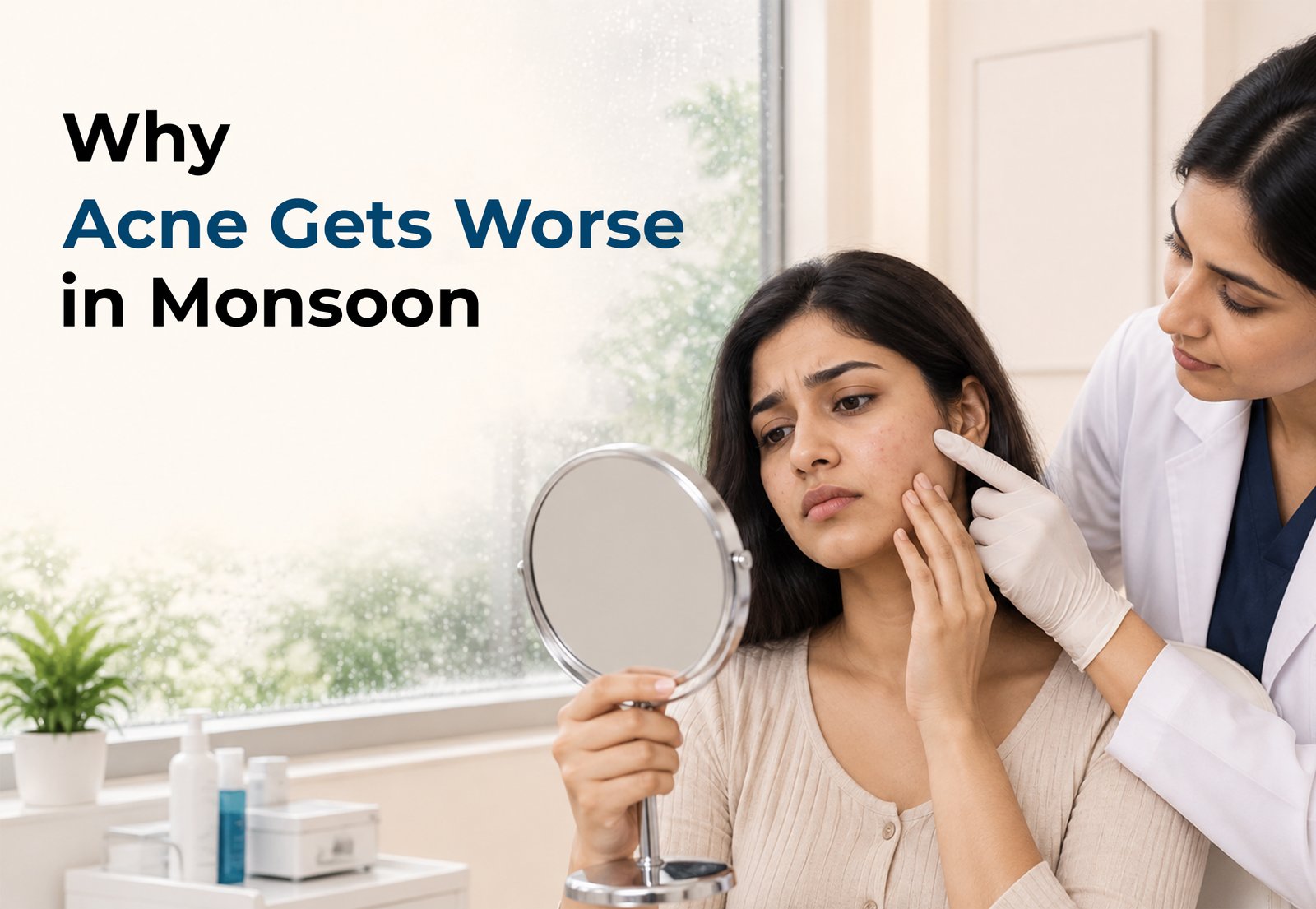
If your skin appears to be more prone to breakouts, the time the rains start It's not just a coincidence, although the causes are more complex than "humidity causes acne." Acne treatment in Rohini typically sees an increase in inquiries in the monsoon season, and with good reason. Increased sweating and humidity can cause skin to appear oilier, which could cause clogged pores and breakouts, particularly when coupled with occlusive items such as pollution, friction, or a lack of cleansing. Monsoon-related acne isn't an individual medical issue; however, the pattern can be present for a large number of people. This guide will explain what's occurring, the best way to minimize the appearance of breakouts during the season, and when it's worthwhile visiting a specialist instead of waiting it out.
Quick Answer: Why is acne more severe during the monsoon?
Humid weather can cause more sweating and oily skin, as well as occlusive skincare products, and friction, pollution, and poor cleansing could cause clogged pores and breakouts for people who are prone to acne. There are many people who experience worse acne in the monsoon season—it's based on the type of skin and the way you use it.
Key Takeaways
- The humidity of the air can cause acne-prone skin to appear oilier, but this is seldom the primary cause for an acne breakout.
- Excessive oil, sweat, and clogged pores grow together in humid weather.
- Certain habits of monsoon skin care—excessive cleansing, use of heavy products, and avoiding sunscreen—can make things more difficult.
- Simple preventive measures (gentle cleaning, use of non-comedogenic items, and regular routine) can help with mild cases.
- A persistent pain, scarring, or painful acne warrants an evaluation by a dermatologist, regardless of the time of year.
- A consistent routine for skincare is more important during the monsoon than changing products in a reactive manner.
Why Does Acne Get Worse During Monsoon?
Many factors overlap and tend to converge during monsoon season. A higher humidity level in the air isn't the sole reason for clogging pores; however, it tends to cause sweating to increase, and a combination of sweat and the natural oil (sebum) accumulation over the surface of your skin provides an increased chance for pores to get blocked. Also,add in the increased exposure to pollutants that are common in urban areas like Delhi during monsoon, and your skin is more prone to being afflicted than it does in normal times.
Other factors that are commonplace can contribute to this issue: occlusive skincare products (thicker creams or foundations that trap oil and moisture on the face) or makeup that remains on for longer than it should be and friction caused by masks or tight clothing that rubs on the face, often touching the face, and inconsistency in cleaning routines—sometimes over-washing and other times under-washing, both of which may result in back-fires in various ways.
It's important to know that acne is a multifactorial issue; hormones, genetics, medications, stress, and the individual type of skin are involved. Monsoon weather is an important factor in the development of acne for certain individuals, but it's seldom doing so on its own.
What Is Monsoon Acne?
.jpeg)
"Monsoon acne" isn't a distinct medical condition—it's a term that is commonly used for acne breakouts that some notice more often or more often during humid, rainy weather. For those who are already prone to breakouts, the change of oil production as well as exposure to the environment can lead to more noticeable or frequent breakouts.
The most common signs during this time include blackheads, whiteheads, small pimples, and inflammation-related acne (redder, larger, and more swollen acne breakouts), and often with an overall increase in oiliness of the skin that is noticed even if there aren't any new pimples appearing.
Common Monsoon Skincare Mistakes That Can Trigger Breakouts
Many well-intentioned behaviors can make monsoon outbreaks worse.
- Face washing too often and the stripping of natural oils could cause the skin to compensate with more oil production
- Utilizing harsh cleanser—causing disruption to your skin's barrier of natural
- The decision to skip moisturizer since skin is already oily is often ineffective for the same barrier-related reasons
- Utilizing oily or heavy products not suitable for humid conditions
- The act of sleeping in makeup—a common but quite common cause of congestion of pores
- Not washing sweaty skin in a proper manner after exercising outdoors or doing exercise
- Squeezing or touching pimples can cause scarring and inflammation risk regardless of the time of year
- Not heeding sunscreen on rainy or cloudy days, if UV radiation is still visible
- The process of over-exfoliating in an effort to manage texture or oiliness
- The use of more active ingredients simultaneously can cause irritation rather than aid
Exfoliation that is too frequent and over-cleansing are worthy of the most attention; both are typical monsoon-specific exfoliations, which can cause irritation to the skin and could cause acne breakouts for people with acne instead of aiding.
How to Prevent Monsoon Acne
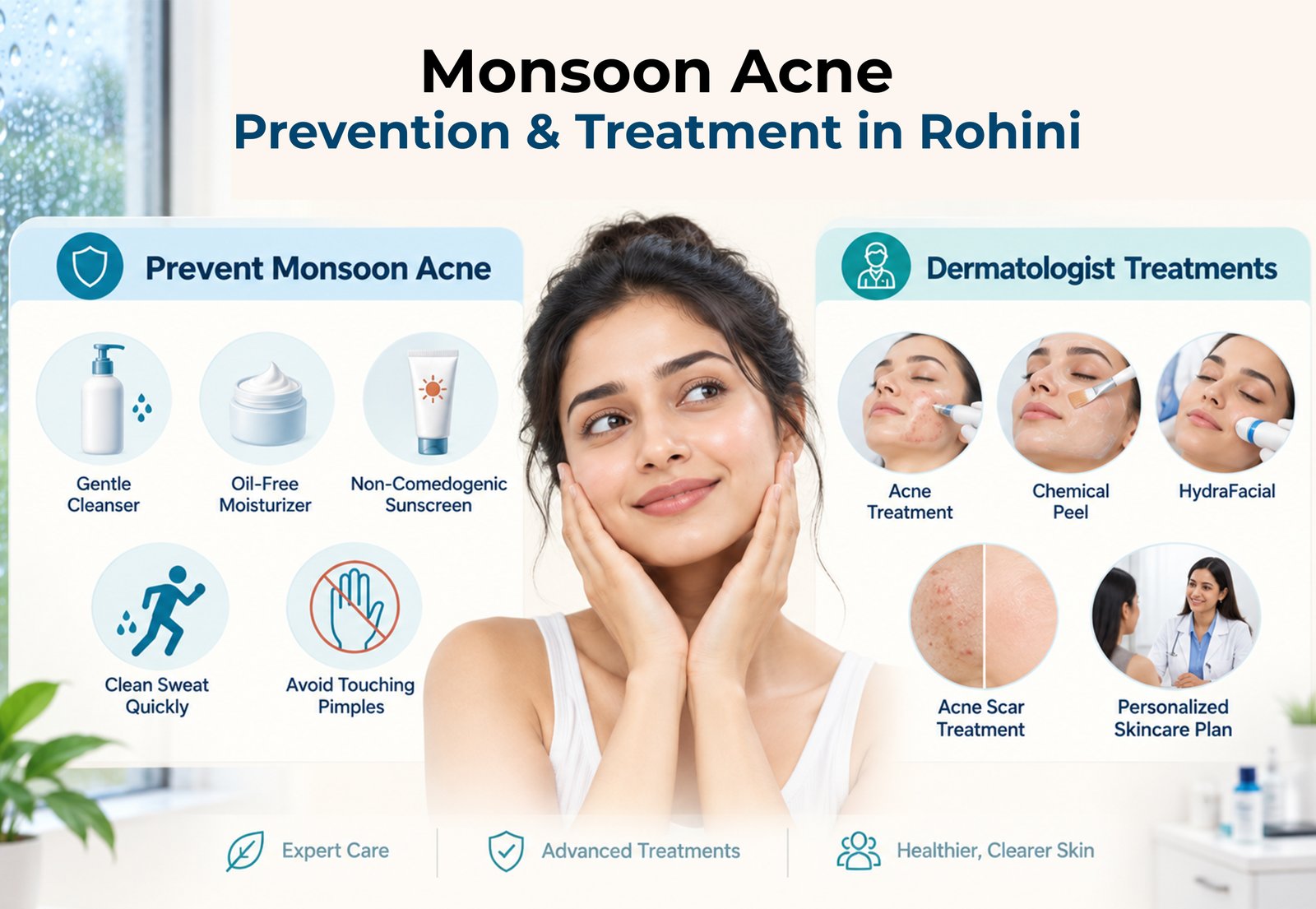
A few practical, dermatologist-aligned habits go a long way for most mild cases:
- Make use of a mild cleanser instead of a harsh or stripping one
- Select non-comedogenic items that are labelled as not likely to cause clogging of pores
- Make sure you moisturize appropriately to your skin type. Oily skin still requires moisture, but in a lighter formula
- Apply a broad-spectrum sunblock every day whether it's raining or shining
- Cleanse after sweating excessively whenever it is feasible, not leaving sweat on the skin for long periods of time
- Replace pillowcases frequently as they collect bacteria and oil over time.
- Do not pick at pimples even if they are more numerous than normal
- Make sure your makeup tools are free of dirt—brushes and sponges may be a breeding ground for bacteria that can cause breakouts to worsen.
- Do not apply excessively heavy skin care over already oily skin
- Keep a consistent routine instead of changing products impulsively every time a new pimple shows up.
Best Acne Treatment in Rohini for Monsoon Breakouts
If prevention isn't enough, the treatment relies on a variety of individual factors, including your type of acne that you're experiencing, the severity of it, and the type of skin as well as the length of time it's lasted, or if you've previously tried treatments, and whether pigmentation or scars are present, as well as the general history of your medical background.
Topical treatments: Dermatologist-recommended, acne-directed topical medications are often a starting point for many cases, formulated specifically to address oil, clogged pores, or inflammation.
The oral treatment: Patients with moderate or severe acne might require prescription medication under the supervision of a medical professional—an option that is decided through consultation and not something to choose for yourself or find out informally.
Professional treatments for skin: Depending on individual evaluation, a dermatologist might look into chemical peels or acne-focused treatments or treatments for acne scars or pigmentation, as well as broader alternatives for rejuvenating your skin. There is no one procedure that is all-purpose and suitable for everyone. The choice is dependent on what's driving your particular breakout.
Acne Treatment Available at Skin Clinic
Skin Clinic examines the individual's issues with skin and acne prior to recommending treatments. The services that are relevant include
- Acne Treatment for breakouts that are active
- Acne Scar Treatment to treat structural scarring after active acne has been controlled.
- pigmentation treatment for discoloration that is left by breakouts after healing
- Chemicalpeel choices to improve texture and tone
- Treatment ofskin to address broader concerns about the quality of skin
- HydraFacial to help with maintenance that is centered around hydration
- A customized skincare plan based on consultation
An important distinction to be reminded of: treatment for active acne and treatments for pigmentation or acne scars aren't always the same. Misaki assesses your specific skin problems and recommends a bespoke treatment plan based on your needs. Not all patients receive the same treatment regimen.
When Should You See a Dermatologist for Monsoon Acne?
Consultation with a professional may be considered if acne seems to persist despite your home treatment or breakouts that are painful and you have noticed large or inflamed lesions; acne leaves visible scars that are resurfacing when breakouts heal; your over-the-counter skincare products don't make a significant change; or your acne is negatively impacting your self-confidence or the breakouts continue to recur throughout the year despite constant efforts. The Rohini dermatologist from Rohini will be able to tell the difference between a flare during the season that can be treated with basic care and a condition that requires medical attention.
Acne vs Acne Marks vs Acne Scars
| Concern | What It Means |
|---|---|
| Active Acne | Inflamed or current pimples |
| Acne Marks | Discoloration left after acne heals |
| Acne Scars | Modifications in the texture of skin or structure |
Each of them requires different methods of treatment. This is precisely why putting them all together under the umbrella of "acne treatment" can lead to a mismatch in expectations. Acne that is active should be addressed first. Marks and scars from structural trauma are usually addressed afterward, as ongoing inflammation could hinder progress on the two other issues.
Why Choose a Skin Clinic in Rohini for Persistent Acne?
A dermatologist at Rohini designed around an accurate diagnosis has several advantages over treating the problem on its own. These include a thorough skin examination, a custom treatment plan instead of an all-encompassing one, constant assessment of progress, and a focus to acne prevention as well as scar prevention, customized advice on skincare, and a structured routine follow-up to ensure your skin's needs are met throughout the year and beyond.
Frequently Asked Questions
Take the Next Step
If the monsoon breakouts have become more persistent than normal or if the acne concerns are more than the seasonal explanation, it's worth having your skin examined by a professional instead of reusing products by yourself.
D-12/183, 1st Floor, Sai Baba Chowk, Sector 8, Rohini, Delhi - 110085 -- Near Rohini East Metro Station Call or WhatsApp: +91-9292920808 Open Monday-Sunday, 10:30 AM - 7:30 PM
• Find out more about acne and the treatment of scars - Contact us or schedule an appointment
This article is intended to provide informational purposes. This article is not medical advice. Consult a dermatologist for your diagnosis as well as the best treatment suitable for your specific condition.