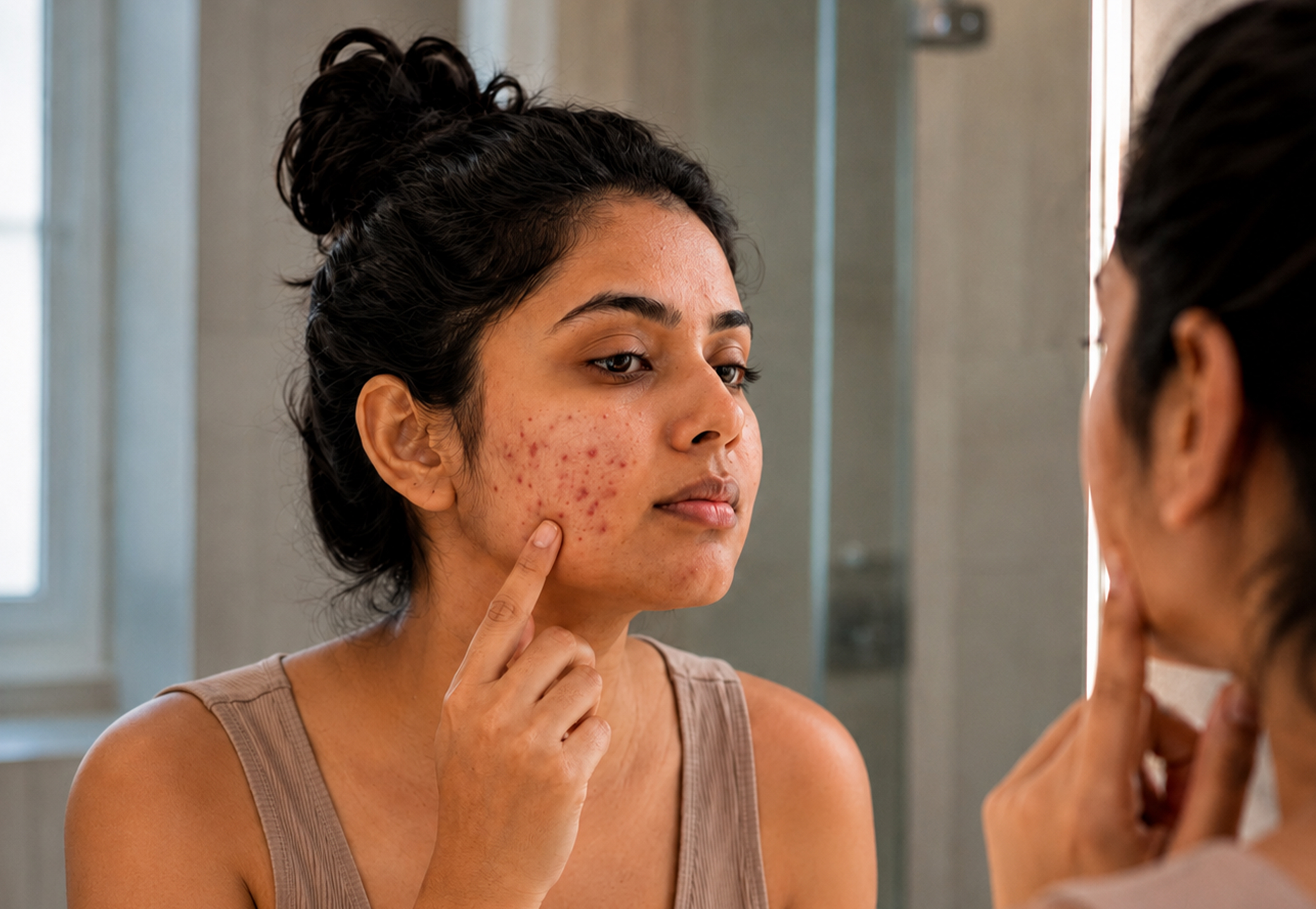
What Are Pimples & Why Do They Form?
A pimple, medically known as an acne vulgaris lesion, develops when a skin pore becomes blocked with oil, dead skin cells and bacteria.
Sebum is a natural oil produced by the skin to maintain hydration.
However, excessive oil production combined with dead skin cells can clog hair follicles.
Once the pore becomes blocked, acne-causing bacteria begin multiplying inside it, triggering inflammation, redness, swelling and pus formation.
This process leads to the pimples commonly seen on the face, forehead, cheeks and chin.
The Common Causes of Facial Pimples
Understanding what triggers pimples is the first step toward controlling them.
1. Hormonal Changes
Hormones called androgens increase oil production in the skin.
Hormonal fluctuations during puberty, menstruation, pregnancy or stress commonly trigger acne breakouts.
2. Bacterial Growth
Acne-causing bacteria thrive inside blocked pores and worsen inflammation.
3. Wrong Skincare Products
Heavy or comedogenic moisturizers, makeup products and sunscreens can clog pores and trigger acne.
4. Stress
Stress increases cortisol levels, which can stimulate oil glands and worsen acne.
5. Diet and Gut Health
High-sugar foods, processed snacks and dairy products may increase acne in some individuals by affecting hormone activity and oil production.
6. Poor Sleep
Lack of sleep affects skin repair and increases stress hormones that can contribute to breakouts.
7. Genetics
People with a family history of acne are more likely to develop persistent pimples.
Types of Pimples
Different types of acne require different treatment approaches.
Non-Inflammatory Acne
Whiteheads
Small flesh-colored bumps formed when clogged pores remain closed.
Blackheads
Open pores where trapped oil oxidizes on contact with air, turning black.
Inflammatory Acne
Papules
Small red tender bumps without visible pus.
Pustules
Red pimples containing visible white or yellow pus.
Nodules
Large painful lumps deep under the skin that may lead to scarring.
Cystic Acne
Severe pus-filled acne lesions that usually require professional dermatological treatment.
Diet to Get Rid of Pimples
Research now clearly shows that diet can influence acne severity in many individuals.
Foods That Help Reduce Pimples
- Oats, brown rice and quinoa
- Fatty fish rich in omega-3
- Spinach, broccoli and leafy vegetables
- Pumpkin seeds and zinc-rich foods
- Green tea
- Yogurt and probiotic foods
- Avocado, walnuts and flaxseed
Foods That May Worsen Acne
- Sugary foods and beverages
- White bread and processed carbohydrates
- Excess dairy products
- Whey protein supplements
- Deep-fried foods
- Energy drinks
The best diet for acne management focuses on reducing inflammation and stabilizing hormones that affect oil production.
Best Acne Scar Treatment in Rohini
Even after active pimples heal, acne marks and scars may remain behind.
Modern dermatology treatments can significantly improve skin texture and appearance.
Types of Acne Scars
Post-Inflammatory Hyperpigmentation (PIH)
Flat dark marks left after pimples heal.
Atrophic Scars
Depressed scars caused by collagen loss.
- Icepick scars
- Boxcar scars
- Rolling scars
Hypertrophic Scars
Raised thick scars that develop due to excess collagen formation.
Clinically Proven Acne Scar Treatments
1. Microneedling
Microneedling stimulates collagen production using tiny sterile needles.
It is highly effective for rolling and boxcar acne scars.
2. Fractional CO₂ Laser
Laser resurfacing improves deep acne scars and boosts collagen remodeling.
3. Chemical Peels
Chemical peels improve acne marks, pigmentation and skin texture.
4. PRP Therapy
Platelet-rich plasma accelerates healing and collagen repair.
5. Subcision
Subcision releases fibrous bands beneath rolling scars to smooth the skin surface.
6. Dermal Fillers
Fillers temporarily improve depressed acne scars by lifting the skin surface.
Ideal Skincare Routine for Acne-Prone Skin
Morning Routine
Step 1 — Gentle Cleanser
Use a mild cleanser suitable for oily or acne-prone skin.
Step 2 — Niacinamide Serum
Helps control oil production and reduces acne marks.
Step 3 — Oil-Free Moisturizer
Hydration is important even for oily skin.
Step 4 — Sunscreen SPF 30–50
Daily sunscreen protects against pigmentation and inflammation.
Evening Routine
Step 1 — Double Cleansing
Remove sunscreen, pollution and makeup thoroughly.
Step 2 — Exfoliation
Use salicylic acid or glycolic acid 2–3 times weekly.
Step 3 — Retinoid Treatment
Retinoids help reduce acne and improve skin cell turnover.
Step 4 — Moisturizer
Night moisturizers support skin repair during sleep.
Myths vs Facts About Pimples
Myth: Popping pimples makes them heal faster.
Fact: Squeezing pimples pushes bacteria deeper and increases scar risk.
Myth: Oily skin does not need moisturizer.
Fact: Lack of hydration can actually increase oil production.
Myth: Sunlight cures acne.
Fact: Excess sun exposure worsens pigmentation and damages skin.
Myth: Acne only affects teenagers.
Fact: Adult acne is extremely common, especially in women.
Myth: Toothpaste removes pimples overnight.
Fact: Toothpaste may irritate skin and worsen inflammation.
Frequently Asked Questions
1. How long do pimples take to heal?
Small pimples may heal within a few days, while deeper acne can take weeks.
2. Why do pimples repeatedly occur in the same area?
Hormonal imbalance, stress and repeated irritation may trigger recurring acne.
3. Can acne scars be completely removed?
Most acne scars can be significantly improved with modern treatments, although very deep scars may not disappear fully.
4. Is diet important for acne control?
Yes.
A balanced anti-inflammatory diet can reduce acne severity in many individuals.
5. When should I consult a dermatologist?
If acne becomes painful, persistent, cystic or starts causing scars, professional treatment is strongly recommended.
Conclusion
Pimples on the face are extremely common, but they are treatable with the right approach.
Understanding the underlying causes, improving skincare habits and maintaining a healthy lifestyle can dramatically improve skin health over time.
Modern treatments now make it possible to manage active acne as well as acne scars safely and effectively.
At MISAKI Skin Clinic, Rohini, customized acne treatments are designed according to your skin type, acne severity and scar condition.
Using advanced dermatology treatments and medically supervised skincare plans, patients receive personalized solutions for clearer and healthier skin.