PRP Hair Treatment in Rohini - Benefits & Side Effects
The loss of hair and the appearance of it are a major concern for both genders and they are increasingly opting for PRP hair treatment in Rohini for hair loss for a safe solution to maintain healthy-looking hair. PRP, which is also known as platelet-rich plasma therapy, utilizes the components of your blood for stimulating hair follicles, making it a growing option for those looking into hair fall treatments in Rohini before considering more extensive treatments.
This guide will explain the details of what PRP hair treatments are as well as how they operate with their advantages and negative effects, who's an ideal candidate, and how they fare against other options for hair restoration. This way, you can have a well-informed discussion with a dermatologist prior to making a decision about whether it's the right option for you.
Quick Answer
What is PRP hair treatment, and is it effective for hair loss?
PRP hair treatment is a procedure that uses platelet-rich plasma derived from your blood that is injected into your area of the scalp to boost hair growth and to encourage hair growth. It has been proven to increase the density of hair and lessen loss in certain people, particularly with early-stage hair loss, but results can vary, and there isn't a 100% guarantee for every type or types of loss.
Key Takeaways
- PRP hair treatment is concentrated platelets from your personal blood, which are rich in growth factors and injected into the scalp.
- It could be beneficial to those with early loss of hair pattern, male or female, as well as the loss of hair that is diffuse.
- The benefits reported include less hair fall, improved density, and improved overall health of the scalp, although the results of each individual may differ.
- Most side effects can be minor, such as the appearance of swelling, redness, or tenderness around injection locations.
- The majority of protocols require several sessions, usually spaced weeks apart, then followed by regular maintenance.
- PRP isn't a replacement procedure for hair transplants in the case of severe, well-established hair loss.
- A dermatologist consultation is crucial to determine if PRP is suitable for your particular type and level of hair loss that you are experiencing.
What Is PRP Hair Treatment?
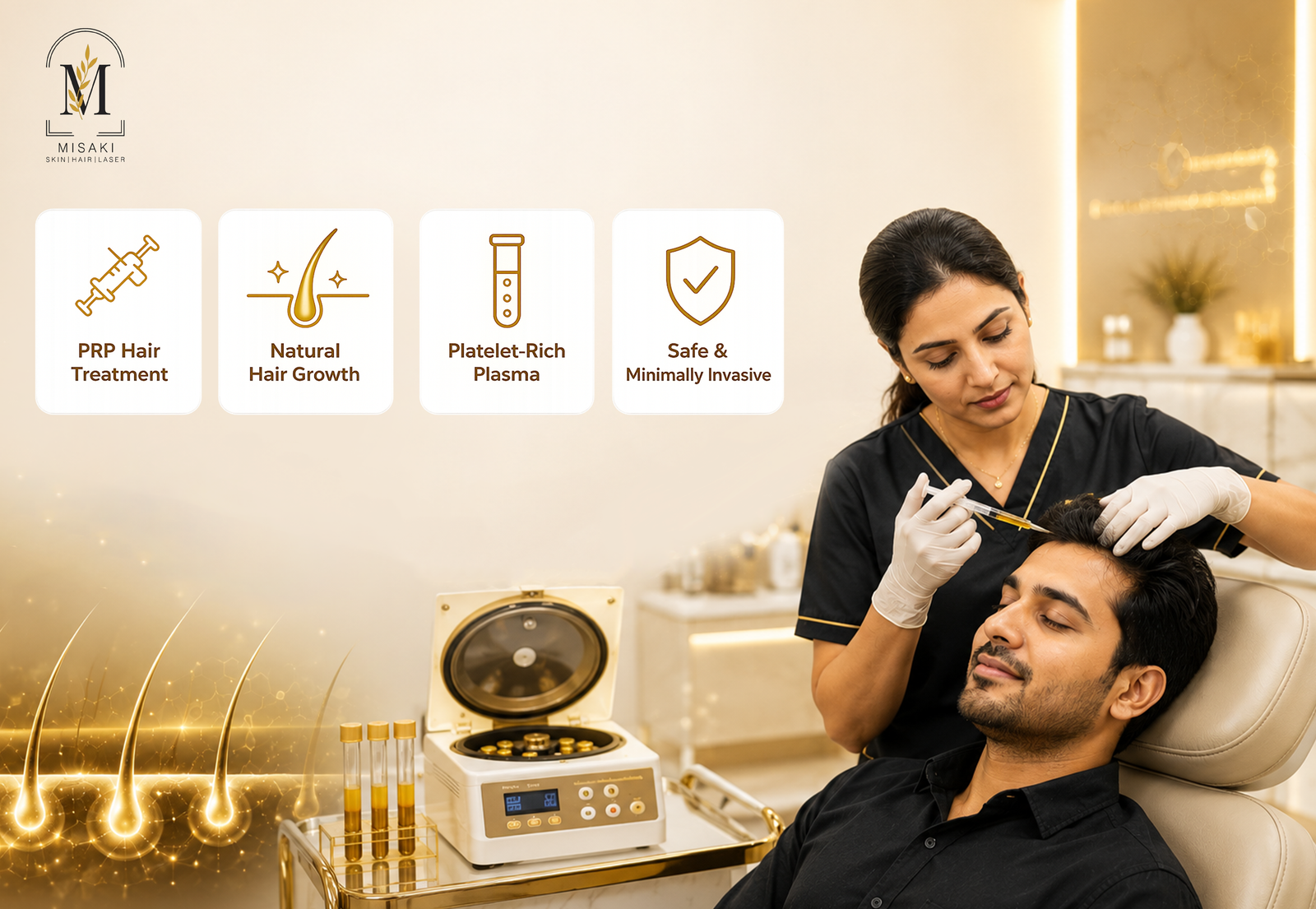
PRP (Platelet-Rich Plasma) hair treatment is a process that involves a tiny portion of blood being separated and processed to concentrate platelets. They can then be injected into regions of the scalp that have thinning or loss of hair.
How PRP Is Prepared
- A small amount of blood is drawn, similar to a routine blood test.
- The blood is put into a centrifuge that spins to split its components.
- This process focuses the plasma rich in platelets and separates the red blood cells as well as other components.
- The concentrated PRP is ready for injection directly into the scalp.
The Scientific Basis
Platelets contain growth factors, proteins that play a function in tissue repair as well as cell signaling. When they are injected into the scalp, the growth factors are believed to stimulate hair follicles, which could aid in the cycle of growth. PRP for hair loss is still being studied in dermatology. Some studies show some positive results with some types of hair loss, but results are not always consistent for the whole population or hair loss types.
How Does PRP Help Hair Growth?
Hair growth occurs in cycles, going through the active, transitional, or resting periods. When it comes to conditions like androgenetic alopecia (male- and female-specific loss of hair), the follicles are shifted into the resting or shed phase, while new hair growth slows.
PRP has been believed to be a part of the process through the following:
- Concentrated growth factors are delivered directly to the hair follicles
- Possibly prolonging the active growth phase of the hair growth cycle
- Helping to improve blood flow and nourishment around hair follicles
- Contributing to improved scalp health, which can influence hair quality over time
It is important to realize that PRP is best used in a therapeutic way for active follicles and not as an opportunity to replenish follicles that have been inactive for a long time.
Who Is a Suitable Candidate?
PRP hair treatment is generally considered more suitable for people with the following:
- Early-stage hair thinning, where follicles are still present and active
- Male pattern hair loss in its earlier stages
- Female pattern hair loss, including diffuse thinning across the scalp
- General hair shedding concerns where follicles have not been dormant for an extended period
Who May Not Be an Ideal Candidate
PRP could be less efficient or ineffective for people who:
- Are experiencing long-term or advanced baldness with no active follicles within the area of treatment
- Have certain blood disorders or blood clotting problems
- Are taking blood-thinning medications (without medical authorization)
- Are breastfeeding or pregnant (as an extra precaution)
A thorough scalp and hair examination by a dermatologist is essential for determining candidacy.
Benefits of PRP Hair Treatment
- Hair strengthening—helping existing hair become more durable
- Improvement in hair density—for some patients, it can give a more attractive appearance over time
- Hair fall is reduced—certain patients report less hair loss after a series of sessions
- The natural approach—since PRP makes use of components from the blood of your body, it avoids adding external substances
- Most people return to their daily routines the next day
- Healthful scalp support could help create an environment healthier for scalp hair growth
These benefits are based on the patient's reported results and dermatology research available, and individual results may differ. PRP doesn't assure hair growth in all cases.
Possible Side Effects of PRP Hair Treatment
As with any injectable procedure, PRP hair treatment can cause potential side effects that tend to be mild and short-lasting:
- Temporary swelling at the injection site
- Some discomfort or soreness after the procedure
- Redness of the scalp that generally disappears in an hour or so
- Tenderness in the area of treatment
- Minor bruises, particularly in areas that have received more injections
- Rare side effects like an allergic reaction or infection are uncommon when the procedure is performed in a sterile, professional setting
Since PRP utilizes personal blood from you, your chance of an allergic response to the plasma itself is minimal. However, reactions to the individual may be different, which is the reason an initial consultation with a doctor and a health history analysis are crucial.
PRP Procedure Step-by-Step
A typical PRP hair treatment session generally includes:
- Consultation – Assessment of scalp condition, hair loss pattern, and medical history.
- Blood Collection – A small blood sample is drawn, similar to a standard blood test.
- PRP Preparation – The sample is processed in a centrifuge to isolate platelet-rich plasma.
- Scalp Preparation – The scalp is cleaned, and a topical numbing agent may be applied for comfort.
- Scalp Injections – The prepared PRP is injected into targeted areas of thinning or hair loss.
- Post-Treatment Care Instructions – Guidance is provided on aftercare and follow-up scheduling.
The entire session typically takes around 30–60 minutes, though timing may vary by clinic and individual case.
Recovery & Aftercare
What to Expect After Treatment
Most people are able to resume regular activities the next day, but some swelling or redness at injection sites could be visible for a short time.
Hair Washing Guidance
Most guidelines recommend waiting at least 24 hours before washing your hair, but your dermatologist will give specific guidance based on the treatment you have received.
Exercise Precautions
Strenuous exercise that can produce excessive sweating is typically advised against during the initial 24-48 hours because sweat and friction could irritate the treated scalp.
Sun Exposure
Direct sun contact with your scalp should be avoided for at least a couple of days after treatment. A hat or appropriate protection is generally suggested.
Follow-Up
PRP is generally administered in several sessions, separated by a few weeks. These are followed by regular sessions, as recommended by your dermatologist in accordance with your response to treatment.
PRP Hair Treatment vs Hair Transplant vs GFC Therapy
Factor
PRP Hair Treatment
Hair Transplant
GFC Therapy
Procedure
Injection of platelet-rich plasma into scalp
Surgical relocation of hair follicles
Injection of growth factor concentrate into scalp
Invasiveness
Minimally invasive
Surgical procedure
Minimally invasive
Downtime
Minimal, usually same-day recovery
Several days to weeks
Minimal, usually same-day recovery
Best Suited For
Early-stage thinning, active follicles
Advanced or stable pattern baldness
Similar to PRP; early to moderate thinning
Sessions Required
Multiple sessions with maintenance
Typically a single surgical session
Multiple sessions with maintenance
Expected Outcomes
Supportive; may reduce shedding, improve density
Can restore hair in bald areas via transplanted follicles
Supportive; similar goals to PRP
Maintenance
Ongoing sessions often needed
Generally more permanent, but surrounding hair loss may continue
Ongoing sessions often needed
Recovery
Very short
Longer, with specific post-surgical care
Very short
Note: Your goals, scalp condition, and hair loss stage will determine the best course of action, or combination of treatments. This comparison should not replace a professional consultation because it is intended for general education.
Pros and Cons of PRP Hair Treatment
Pros
- Makes use of your own blood, reducing the risk of an allergy to the plasma itself
- Minimally invasive, with little to no downtime
- Can be combined with other treatments, such as GFC therapy in some instances
- Could help slow the process of hair shedding and strengthen existing hair
Cons
- Requires multiple sessions and ongoing maintenance for lasting benefits
- Not suitable for areas with absent or long-dormant hair follicles
- Individual results may vary and cannot be guaranteed
- Involves needle injections, which certain patients might find uncomfortable
Myth vs Fact
Myth: PRP always regrows lost hair.
Fact: PRP could aid in maintaining active follicles and reducing shedding for some individuals, but it will not guarantee growth, particularly in areas with lost hair or dormant follicles.
Myth: PRP causes pain.
Fact: Most patients experience minor discomfort, but not severe pain, especially because a numbing agent is typically applied before injections. The degree of discomfort can vary individually.
Myth: PRP works after one session.
Fact: PRP usually requires a series of sessions, followed by maintenance treatments to maintain visible effects.
Myth: PRP is safe for all.
Fact: PRP is more effective in early-stage thinning with active hair follicles. It might not be appropriate for advanced baldness or specific medical issues, which is why a dermatologist's evaluation is vital.
Myth: PRP replaces hair transplant surgery.
Fact: PRP and hair transplants serve different functions. PRP helps strengthen existing hair follicles and a hair transplant can move hair follicles into areas of baldness.
Why Choose Misaki Skin Clinic?
The team at Misaki Skin Clinic starts with a thorough discussion to determine your hair-loss pattern, your scalp's health, and medical history before suggesting an appropriate treatment. Our approach consists of:
- Personalized Consultation – Every treatment starts with a scalp analysis and hair evaluation.
- Dermatologist-led assessment – Decisions about treatment options are made by highly qualified dermatologists and hair specialists.
- Modern technology – PRP preparation involves well-maintained, standardized equipment.
- Hygiene standards – Every session is performed under strict sanitation and safety practices.
- Customized treatment plans – PRP could be recommended alongside other options such as GFC Treatment for Hair or a consultation for a hair transplant.
If you're searching for hair specialists in Rohini or dermatologists in Rohini for concerns regarding hair fall, our team will assist you in determining if GFC therapy, PRP, or a different approach is the best option for your hair needs.
Most-Asked Questions
1. What Is PRP Hair Treatment?
The PRP treatment for hair is a process that makes use of plasma rich in platelets from your own blood. It is infused into the scalp to increase hair growth and support the growth cycle.
Simply put, a small amount of your blood is drawn and then spun in a centrifuge so that it separates out the platelet-rich portion, which is then injected into areas of thinning on your scalp. Platelets are a source of growth factors, natural proteins that aid in tissue repair and are believed to “wake up” and support hair follicles that are active but not performing as well. This is often the first question people ask because most patients have heard of “PRP” but aren't sure exactly what will happen during the procedure.
2. Is PRP Effective for Hair Loss?
PRP is a good option for certain people, especially those with thinning but active hair follicles. The effectiveness of PRP varies for each individual and is best used as part of a comprehensive treatment program.
Effectiveness is the second most sought-after issue and is a valid one to consider since no hair treatment is identical for each person. PRP usually shows the greatest results for people who have hair follicles that are active but weaker than in regions that haven't had hair for many years. PRP is often paired with other methods, for example GFC treatments or a customized hair maintenance routine, rather than used alone as a fix.
3. Is PRP Safe?
PRP is typically considered secure when carried out by trained professionals in sterile environments because it uses the patient's own blood. Like any injection procedure, it is possible to experience mild side effects.
Since PRP is made using your own blood rather than an outside substance, the likelihood of an allergic reaction is very low. However, safety depends on the doctor's sterilization technique and proper handling of blood, and a dermatologist examining your medical history before treatment are all important. The slight temporary reactions such as swelling, redness, or tenderness at injection sites are normal and expected but not an indication of something being wrong.
4. Does PRP Regrow Hair?
PRP can help support existing active hair follicles, and in certain cases increase density; however, it's not guaranteed that it will grow hair in areas that suffer from permanent or complete loss of hair.
This is where expectations matter most. PRP can be described as a therapy that supports and helps hair follicles that are still able to produce hair grow more effectively. It's not intended to revive hair in areas that were completely bald for a long period of time, as the follicles in those areas are usually not active anymore. Anyone who promises full regrowth through PRP alone should be treated with caution.
5. Is PRP Better Than Hair Transplant?
There is no always “better” option—PRP is a good choice for existing hair follicles and can be used to treat early-stage thinning, while hair transplants are typically employed for more advanced and permanent hair loss. The most appropriate choice depends on the specifics of your situation.
The two therapies address distinct issues. PRP uses existing hair follicles, while a hair transplant physically moves follicles into areas of baldness. Certain patients opt for PRP by itself, while others undergo a transplant, and some choose to use PRP after an operation to support nearby hair. A consultation with a dermatologist is the only sure method of determining which route and/or mix of options is best suited to your hair loss pattern.
Take the Next Step
If you're near Rohini, Pitampura, Shalimar Bagh, Prashant Vihar, or any other area in North Delhi, you don't have to travel to another city to get professional skin, hair, or other laser therapies.
📍 D-12/183, 1st Floor, Sai Baba Chowk, Sector 8, Rohini, Delhi - 110085, Near Rohini East Metro Station
📞 Call or WhatsApp: +91-9292920808
🕒 Open Monday-Sunday, 10:30 AM - 7:30 PM
The first appointment is all about getting to know your skin condition or hair problem. Our dermatologists will look into your issue, explain why it's going on, and help you find a practical solution that is honest and truthful. No pressure, no upselling.
Related Reading
- PRP Hair Treatment in Rohini: Side Effects, Benefits & What You Need to Know Before Treatment
- Skin Clinic in Rohini — All Skin & Laser Treatments
- Contact Us / Book an Appointment
Sources: https://misakiskin.in/services | https://misakiskin.in/about
This article is provided for informational purposes only. It is not medical advice. You should consult a licensed dermatologist for diagnosis and treatment tailored to your particular skin and hair condition.