
People usually look into Q-Switch laser treatment in Delhi for dark spots, sun spots and other similar stubborn pigmented spots. It is a laser treatment where energy is delivered in very quick pulses. Different systems may have different benefits and uses. It is important to know if the treatment is right for you after a professional assessment. This treatment may not work for all types of pigmentation. There are different factors that may make a spot darker with laser treatment. This article describes how the treatment works, the benefits, side effects, risks, and what to expect after the treatment.
Q-Switch laser treatment is used to improve certain kinds of pigmentation and spots. The cost and number of sessions depend on what is being treated, the laser system, and the individual skin. It should only be done after a professional assesses the skin.
What Is Q-Switch Laser Treatment and How Does It Work?
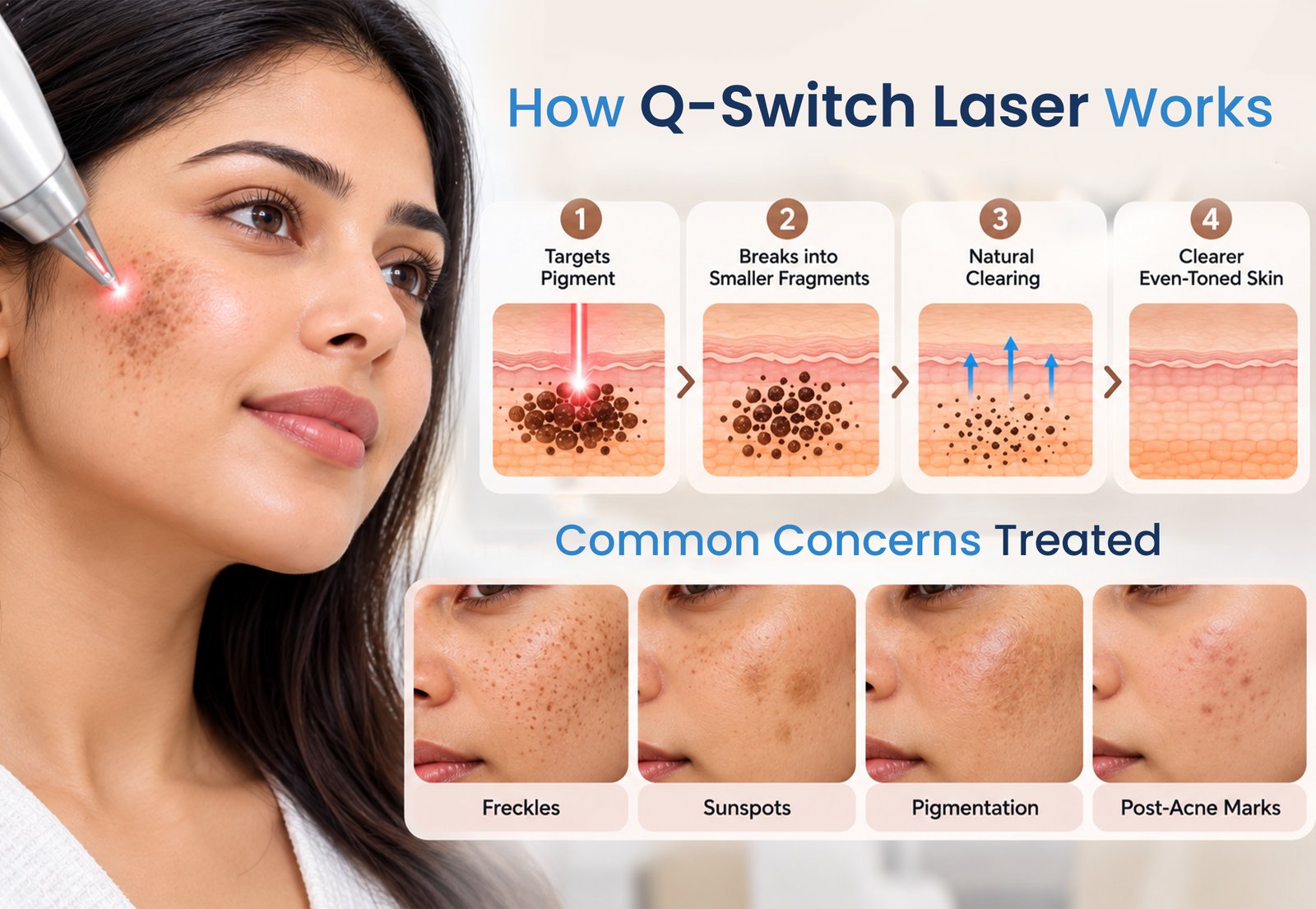
A regular pulse laser builds up energy and then releases it in a steady stream. With a Q-switch, the energy is released in extremely high-intensity, very short pulses. The goal is to break up the pigment into smaller fragments that are eventually cleared by the body. Because the duration of the pulse is so short, the aim is to quickly affect the target pigment and limit thermal damage to the surrounding skin.
There are different types of Q-switch lasers, which operate differently. Some of these differences can lead a practitioner to choose one type of Q-switch laser over another, based on the depth and/or location of the pigment being treated and/or the tone of the patient’s skin. Again, one reason that an in-person assessment is performed is to identify the condition that is being treated.
What Are the Main Q-Switch Laser Benefits?
For suitable candidates, the potential benefits include:
- Improvement in the appearance of certain pigmented spots
- Support for treating selected types of uneven skin tone
- Targeted treatment of specific pigment-related concerns
- Possible improvement in the appearance of selected superficial pigmentation
These are potential benefits, not promises. Outcomes vary between people, complete removal of pigmentation can't be guaranteed, and some conditions can return or need ongoing management. The Q-Switch laser benefits that matter most in practice are the ones that fit your specific diagnosis.
Q-Switch Laser for Pigmentation and Dark Spots
A Q-switch laser may be used for some forms of superficial pigmentation. Examples may include some age-related or sun-related pigmented spots. The ability to distinguish one condition from another is critical. Freckles, pigmented lesions, and post-inflammatory and melasma hyperpigmentation are all separate conditions and do not respond similarly.
This is particularly true when discussing Q-switch laser treatments for pigmentation-prone skin and melasma, as some laser treatments can actually make the conditions worse. A cautious clinician may recommend the use of skincare and/or sun protection or another treatment before consideration of laser treatment. Not all dark spots should be treated with a laser, and laser treatment of dark spots should only occur after an accurate diagnosis. If you don't know what your dark spots are, Misaki's overview on pigmentation treatment in Rohini is a good place to start.
Who May Be a Suitable Candidate?
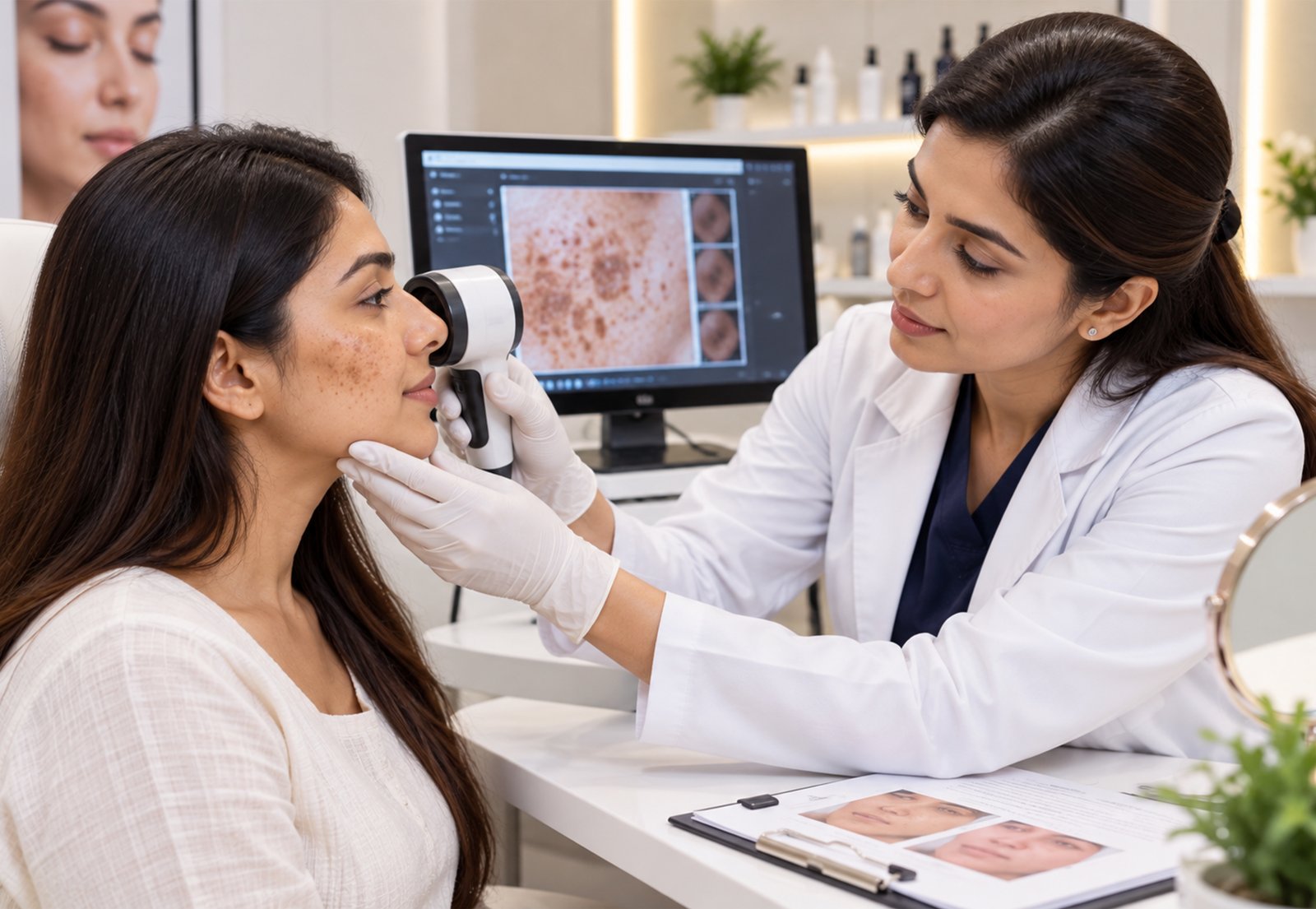
A qualified professional will usually take into consideration:
- The depth and type of pigmentation
- Your skin tone, including your predisposition to develop dark marks from skin inflammation
- Your medical history
- Active skin inflammation and/or irritation
- Your expectations of treatment
- Previous cosmetic treatments
- Will you comply with the aftercare recommended
Sometimes the assessment indicates that skincare, sun protection or a prescribed medication may be a better place to start, or that a chemical peel would be more appropriate.
How Many Q-Switch Laser Sessions Are Needed?
This depends on the case and desired results. In some cases, multiple sessions are necessary, and the treating doctor will decide the optimum time to space the sessions. Assessment will determine the need for further sessions. Since no one can physically examine your skin, any promises regarding session counts and timelines should be taken with a grain of salt.
Q-Switch Laser Cost in Delhi: What Affects the Price?
The cost of Q-Switch laser treatment varies. The factors which affect the cost of treatment in Delhi are:
- Extent and type of pigmentation
- Size of treatment area
- Laser system and treatment protocol
- Provider and clinic
- Sessions recommended
- Consultation and after care
Generally speaking, lower numbers do not always equal better value. It is important to look at what is included in the price and assess the overall value for money. A lower price per session may not be good value if it requires a higher number of sessions or follow-up care is charged additionally.
Q-Switch Laser Side Effects and Risks
What are the side effects of Q-Switch laser treatment? The following are temporary side effects that might occur:
- Swelling
- Redness
- Changes in the skin of the treated area, such as crusting or pinpoint changes
- Lightening or darkening of the treated area
There are also a number of more serious side effects, such as scars, burns and post-inflammatory pigmentation. The risk of these occurring depend on the experience of the operator, the equipment used and how well aftercare instructions are followed. Other possible side effects of laser treatment may not appear for months or years after treatment. Because of the high risk of side effects, get medical advice if you are concerned or if you are suffering from any of the above effects.
Q-Switch Laser Aftercare: How to Protect Your Skin
You should follow the aftercare advice of your treating professional, in particular:
- Avoid direct or excessive exposure to the sun
- Use broad-spectrum (UVA/UVB) sunscreen
- Do not rub or scratch the treated area
- Avoid using irritating skincare products or actives until advised
- Use mild skincare products and a recommended moisturizer
- Attend all follow-up appointments
Sun protection is very important because it reduces the risk of the treatment undoing and returns of pigmentation. General aftercare should be in line with clinic-specific advice.
Is Q-Switch Laser Safe for Indian Skin?
Q-Switch Laser is often used on individuals with skin tones that are more on the fair side, however, this is not a hard fast rule. There are different lasers, settings, and treatment plans that make a huge difference. Longer wavelengths are thought to be more suitable for use on darker skin types as compared to shorter wavelengths, however, settings and experience of the operator also make a huge difference as well. Pigmentation is always a concern, especially if you are someone who has had issues with dark marks from previous inflammation and/or procedures. It is always a good idea to consult with a qualified operator to discuss the risks, options and what to expect.
Where to Explore Q-Switch Laser Treatment in Rohini, Delhi
Misaki Skin & Laser Clinic is located in Sector 8, Rohini, Delhi. Its website describes Q-Switched ND:YAG laser treatment for concerns including pigmentation and melasma, freckles and sunspots, acne marks, uneven skin tone and tattoo removal, performed under the supervision of dermatologists. The page mentions that 4–6 sessions are usually recommended, which is best read as a general guide rather than a promise, since your own plan depends on assessment.
A consultation can help determine whether it's appropriate for your pigmentation or dark spots, and the clinic also offers related services such as skin rejuvenation, acne treatment and HydraFacial. These aren't equivalent to Q-Switch laser, and the right option depends on your skin. If you'd like to ask about availability and suitability, you can get in touch with the clinic.
Misaki Skin & Laser Clinic D-12/183, 1st Floor, Sai Baba Chowk, Sector 8, Rohini, Delhi – 110085 Website: misakiskin.in Phone/WhatsApp: +91 9292920808
Frequently Asked Questions
What is Q-Switch laser treatment used for?
A type of laser that delivers very powerful, but extremely short energy pulses, to break up pigment. Q-Switches may be used to treat sunspots, freckles and some superficial pigmented lesions (and, if appropriate, other indications, such as the removal of tattoos.) Not all systems may address the same indications. Suitability will depend on professional assessment.
Can Q-Switch laser remove pigmentation and dark spots?
Not all types of pigmentation respond to laser, and Q-Switch may improve the appearance of some superficial pigmentation. However, complete removal cannot be guaranteed. Melasma is a type of pigmentation which can require special consideration and may recur. Not all types of laser may be appropriate to treat these concerns. A thorough assessment by a professional will determine the type of laser, if any, that may be appropriate.
How many Q-Switch laser sessions are needed?
It depends on various factors and professional assessment. Follow up is required, and based on the response, more sessions may be recommended. No one can guarantee how many sessions will be needed, or how long the treatment will take, before evaluating your condition personally.
What is the cost of Q-Switch laser treatment in Delhi?
It depends on the area requiring treatment, type of laser, laser system and protocol, your condition and the qualification of the person performing the treatment. Before evaluation of your condition, an estimate cannot be given. Check if the quote given to you is a complete package including all follow-up visits.
What are the possible side effects of Q-Switch laser treatment?
Temporary redness, swelling, and increased sensitivity are common after treatment. In treated areas, there may be temporary darkening or lightening of the skin. Crusting or pinpoint changes may occur after treatment. Burns or scarring are potential risks as well as the formation of post-inflammatory pigmentation. If there is persistent, severe symptomatology after treatment, you should consult a provider.
Is Q-Switch laser safe for Indian skin?
It can be appropriate for some Indian skin tones, but laser choice, settings and treatment plan matter. Pigmentation-prone skin carries a higher risk of post-inflammatory pigmentation, especially after past dark marks from irritation or procedures. A consultation should explain risks, alternatives and expected outcomes.
Where can I enquire about Q-Switch Laser Treatment in Rohini?
Misaki Skin & Laser Clinic in Sector 8, Rohini, nearby Rohini East Metro Station, has Q-Switched ND:YAG laser on their website. You can call +91 9292920808 for more information on availability, consultation, and treatment for your pigmentation and dark spots.
Take the Next Step
📍 D-12/183, 1st Floor, Sai Baba Chowk, Sector 8, Rohini, Delhi – 110085, near Rohini East Metro Station 📞 Call or WhatsApp: +91 9292920808
→ Learn about Q-Switched laser at Misaki → Explore all skin & laser treatments
This article is meant only for informational purposes. It is not medical advice. You should consult a dermatologist to determine the diagnosis and treatment that is appropriate to your particular condition.