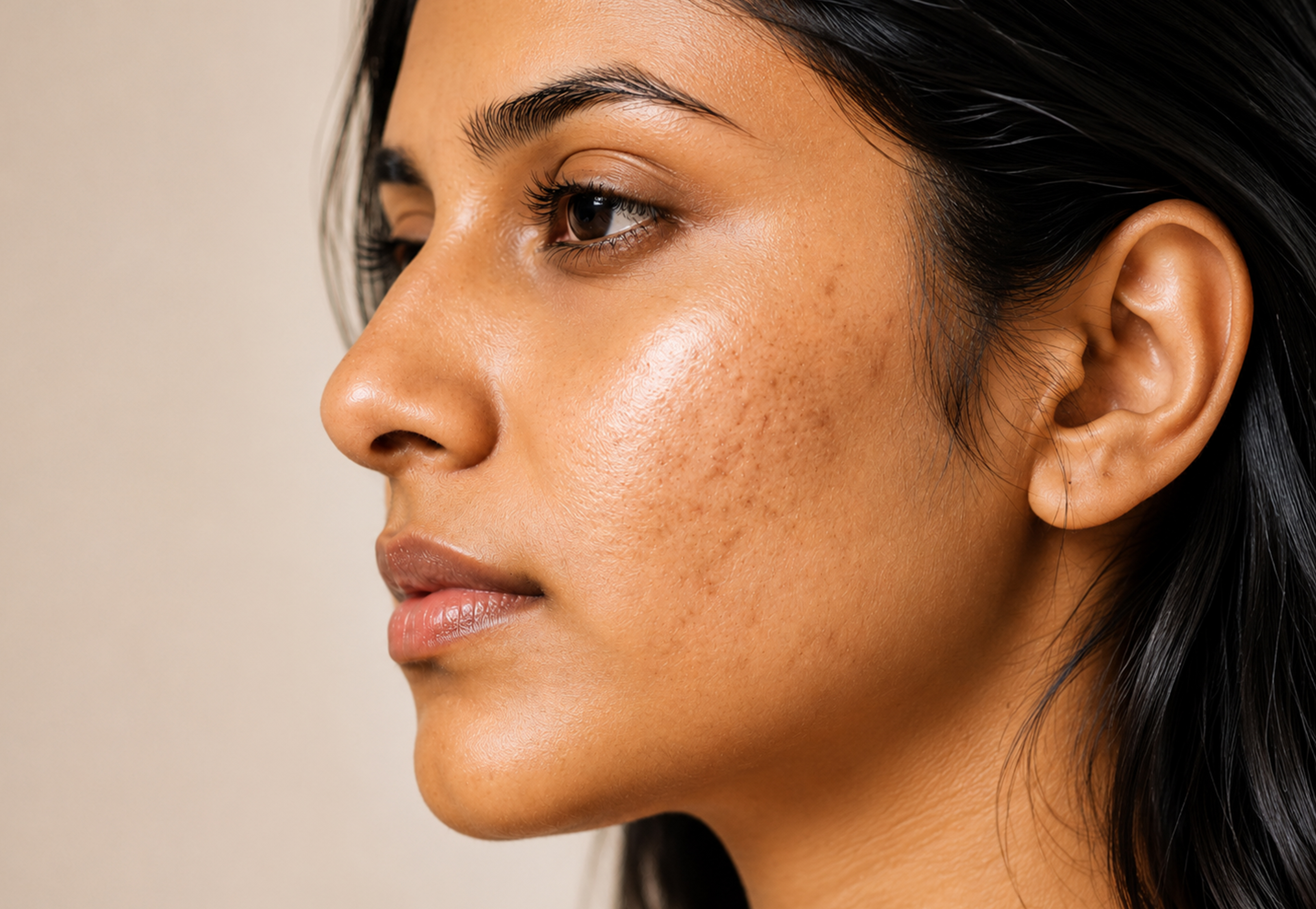
Why Summer Causes Sun-Stressed Skin
The summer in Delhi can be extremely harsh on the skin.
Continuous exposure to UV rays, heat, dust and pollution damages the skin barrier and leaves skin dehydrated, irritated and dull.
Sun-damaged skin is not only about tanning.
It also causes redness, sensitivity, pigmentation, flakiness and loss of natural glow.
Following the right sun-stressed skin recovery routine helps repair the skin barrier and restore healthy skin.
What Makes Skin Sun-Damaged?
1. UV Rays
UVA rays break down collagen and accelerate premature ageing while UVB rays cause tanning, redness and sunburn.
Both damage the skin barrier and increase inflammation.
2. High Temperatures
Excess heat dehydrates the skin quickly and causes redness and irritation.
3. Dehydration
Sweating and low fluid intake leave the skin dry, tight and flaky.
4. Pollution
Dust, smoke and pollution particles clog pores and create free radical damage.
5. Skipping Sunscreen
Without sunscreen, UV rays continuously damage the skin even indoors or during cloudy weather.
Signs Your Skin Is Sun-Stressed
- Tightness and dryness
- Dull and tired-looking skin
- Redness and irritation
- Flaky or peeling patches
- Uneven skin tone and tanning
- Sensitivity to skincare products
- Unexpected breakouts
Step-by-Step Sun-Stressed Skin Recovery Routine
Step 1 — Gentle Cleansing
Avoid harsh face washes after sun exposure because they further damage the skin barrier.
Use a mild hydrating cleanser that removes sweat, sunscreen and dirt without stripping natural oils.
Always wash with lukewarm water and pat dry gently.
Step 2 — Cooling Toner or Mist
Hydrating mists and soothing toners containing cucumber, rose water or green tea help calm inflammation and provide immediate hydration.
Step 3 — Aloe Vera Application
Aloe vera gel provides instant cooling, reduces redness and deeply hydrates sun-damaged skin.
Using chilled aloe vera gel offers additional soothing benefits.
Step 4 — Antioxidant Serum
Vitamin C serums help repair free radical damage, brighten the skin and improve collagen production.
Niacinamide serums help reduce redness, strengthen the skin barrier and improve pigmentation.
Step 5 — Hydrating Moisturiser
A deeply hydrating moisturiser helps restore moisture loss caused by sun exposure.
Look for ingredients like hyaluronic acid, glycerin and ceramides for skin barrier repair.
Step 6 — Sunscreen Every Morning
Broad-spectrum SPF 50 sunscreen is essential after sun damage recovery.
Reapply sunscreen every two hours if outdoors.
Gel sunscreens work well for oily skin while cream-based sunscreens are better for dry skin.
Step 7 — Night Recovery Routine
Nighttime is when the skin repairs itself naturally.
- Double cleanse if wearing sunscreen or makeup
- Use hydrating serums with hyaluronic acid
- Apply a ceramide-rich night cream
- Use sleeping masks once or twice weekly
Avoid retinol and strong exfoliating acids immediately after heavy sun exposure.
Best Ingredients for Skin Barrier Repair
Hyaluronic Acid
Provides deep hydration by attracting and holding water inside the skin.
Niacinamide
Reduces inflammation, repairs the skin barrier and improves skin texture.
Ceramides
Restore the damaged skin barrier and prevent further moisture loss.
Vitamin C
Fights free radical damage, improves glow and reduces pigmentation.
Aloe Vera
Calms redness, irritation and inflammation while deeply hydrating the skin.
Mistakes to Avoid After Sun Exposure
Harsh Scrubbing
Physical scrubs worsen irritation and damage already sensitive skin.
Over-Exfoliation
Avoid strong AHAs and BHAs immediately after sun exposure.
Hot Water Washing
Hot water increases dryness and strips away protective oils.
Skipping Sunscreen Indoors
UV rays can penetrate through windows and continue causing damage indoors.
Using Fragranced Products
Strong fragrances can irritate already inflamed skin.
Professional Treatments for Sun-Damaged Skin
HydraFacial
HydraFacial deeply cleanses, exfoliates and hydrates the skin using advanced serum infusion technology.
Laser Skin Rejuvenation
Laser treatments improve collagen production and reduce pigmentation and uneven skin texture.
Pigmentation Treatments
Professional pigmentation therapies target melasma, tanning and dark spots caused by UV damage.
Hydrating Facial Treatments
Clinical hydration therapies restore moisture balance and improve skin glow quickly.
Tips for Healthy and Glowing Skin
- Drink 8–10 glasses of water daily
- Eat antioxidant-rich foods
- Never skip sunscreen
- Reapply sunscreen every 2 hours outdoors
- Wear hats and UV-protective sunglasses
- Avoid peak sun hours between 10 AM and 4 PM
- Maintain a consistent skincare routine
- Visit a dermatologist for persistent pigmentation or sensitivity
Frequently Asked Questions
1. How long does sun-damaged skin take to heal?
Mild sun damage can improve within a few days while pigmentation and uneven texture may take weeks or months depending on severity.
2. Can I use retinol after sun exposure?
No.
Retinol should be avoided immediately after sun exposure because it may worsen irritation and redness.
3. Is aloe vera enough for sun-damaged skin?
Aloe vera helps soothe and hydrate the skin but works best when combined with moisturisers and antioxidant serums.
4. Which SPF is best for sun-damaged skin?
Dermatologists recommend broad-spectrum SPF 50 with PA+++ protection for sensitive and sun-damaged skin.
5. When should I visit a dermatologist for sun damage?
If pigmentation, sensitivity or unusual dark spots continue despite skincare, professional treatment may be required.
Conclusion
Sun-stressed skin requires hydration, barrier repair and consistent sun protection.
A gentle skincare routine with soothing ingredients like aloe vera, hyaluronic acid, ceramides and vitamin C can significantly improve damaged skin.
At MISAKI Skin & Laser Clinic, customized skincare treatments and dermatologist-guided therapies help restore healthy, glowing and hydrated skin safely and effectively.